Download the Word template. It also opens in Google Docs: File > Open > Upload.
The template
[Organization name] Board of Directors minutes Meeting: regular / special. Date, time, place: [date], [time], [place or link] Present: [directors]. Absent: [names]. Also present: [staff, guests] Quorum: [yes / no, number present of number required] Conflicts of interest declared: [none / name and item]
- Call to order and quorum. The chair called the meeting to order at [time]. The secretary confirmed a quorum.
- Approval of previous minutes. Approved [as written / as corrected]. Moved by [name], seconded by [name].
- Reports. Treasurer: [key figures]. Executive director and committees: [updates].
- Business. [Item, two or three lines, then the motion in the exact words voted on.]
| Motion | Moved by | Seconded by | Result |
|---|---|---|---|
| [exact wording] | [name] | [name] | For [n], against [n], abstain [n]. Carried / failed |
- Executive session. The board went into executive session at [time] to discuss [general reason]. Present: [names]. [No action taken / action taken: motion]. Returned to open session at [time].
- Action items. [Task, owner, due date.]
- Next meeting and adjournment. [date, time, place]. Adjourned at [time].
Minutes taken by: [name]. Approved on: [date]. Signed: Chair ______ Secretary ______
What to record
Quorum. Your bylaws set how many directors must be present for the board to act. Write the number present and, if a director joins late or leaves, the time. If quorum is lost, note that no more votes could be taken.
Motions and votes. Write each motion as it was put to the vote and the result. Under Robert's Rules of Order, minutes record what was done, not what was said. That means the motions, whether they carried, and the actions taken, not who argued what. The mover is recorded. The seconder need not be unless your group wants it, and many boards do. Votes by name or with counts are common for boards, so follow your bylaws.
Conflicts of interest. When a director has a personal stake in an item, record that they declared it, and whether they left the room or abstained for that vote. Boards of nonprofits are often required to do this, so check your policy.
Executive session. Record the time you went in and came out, the general reason, who stayed, and any action taken. Do not write out the confidential discussion. Many boards keep separate, confidential minutes for the session.
Approval. The board approves the minutes at its next meeting, with corrections if needed. The approved version is the official one.
Rules differ by state, country and type of organization, and your bylaws come first. This is a practical layout, not legal advice.
Fill it from a recording
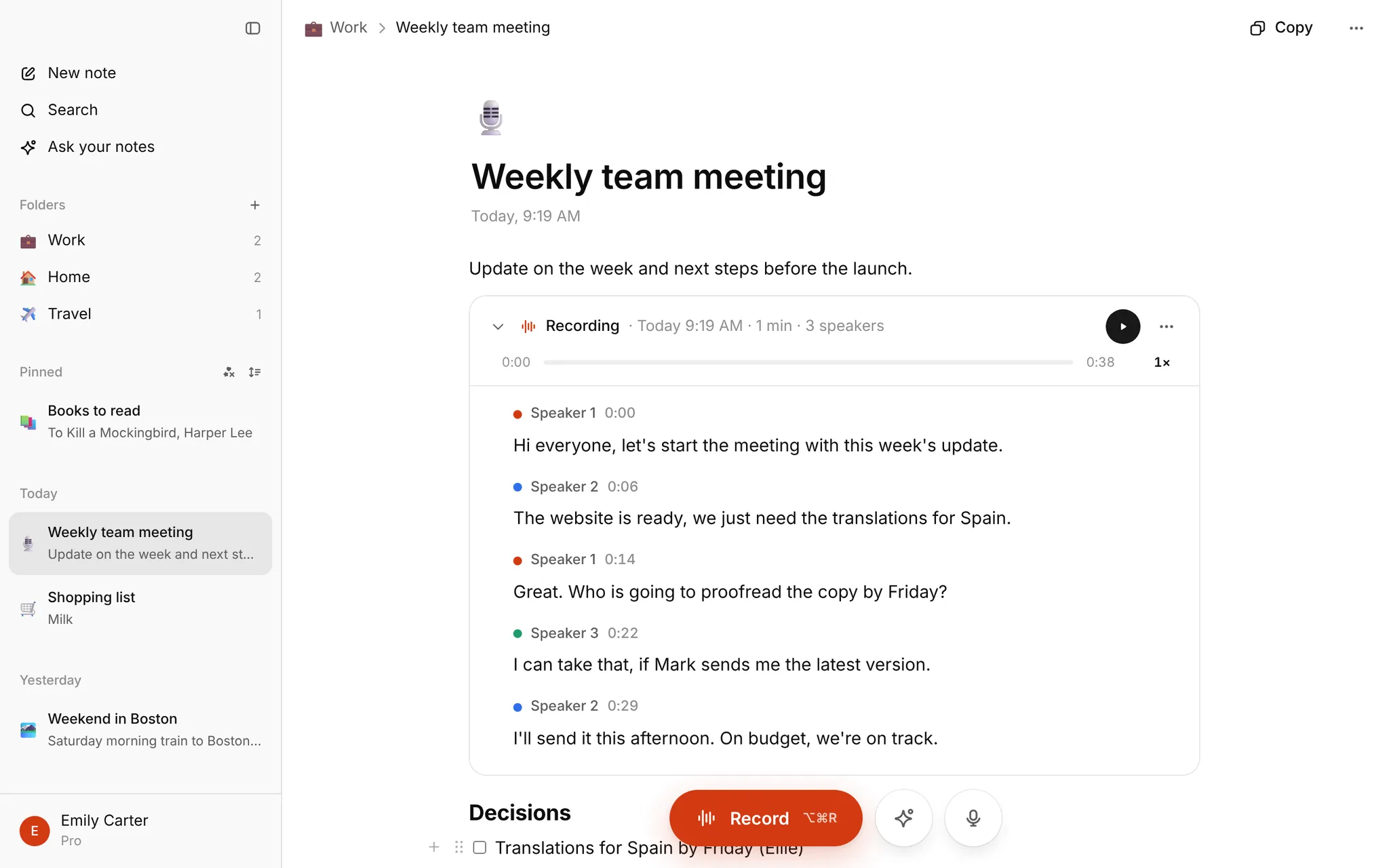
Record the meeting in My notes and a few minutes after you stop, the transcript appears with speaker labels and times. Ask AI can draft the minutes from it in the shape above. It is a first draft: you check the names, numbers and votes against the transcript before it goes anywhere. There is no bot for online meetings, and no Word export. Copy the text into the template. Nothing is for sale right now: every account that signs in has Pro free until January, up to 10 hours of transcription a month.
More: meeting minutes hub, minutes template, how to take meeting minutes.